Beyond Cost Arbitrage: How Strategic Global Talent Networks Are Becoming America's Most Underused Capability Asset

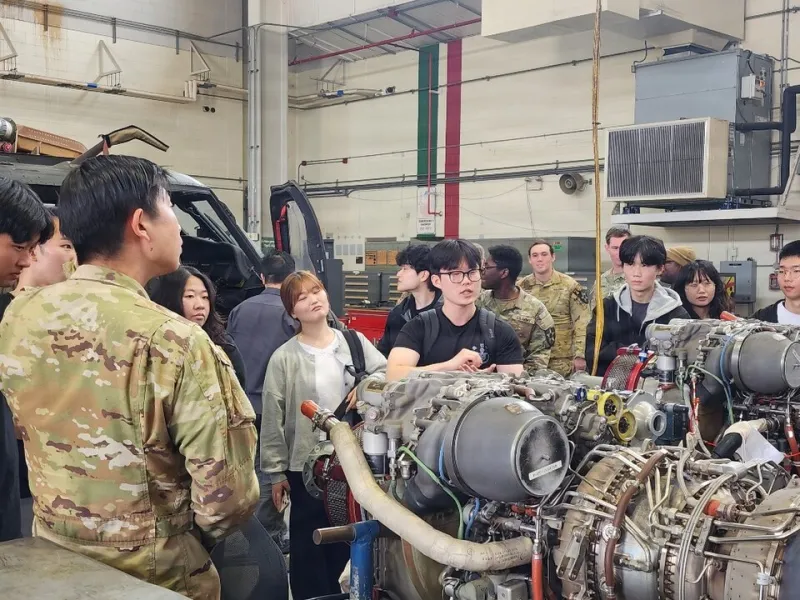
Photo: Intercultural Leadership, CC BY-SA 4.0, via Wikimedia Commons
Ask most American executives to describe their organization's offshore talent strategy, and the conversation will reliably migrate toward cost. Lower labor costs, favorable exchange rates, expanded coverage hours—these are the metrics that tend to dominate the business case. They are legitimate considerations. But organizations that reduce global talent engagement to a cost equation are missing something considerably more important.
The most strategically sophisticated companies operating today are not using global talent relationships primarily to cut expenses. They are using them to build something far more durable: organizational capability that is resilient to the volatility of any single talent market. That distinction—between cost arbitrage and capability architecture—is the difference between a short-term operational decision and a long-term competitive advantage.
The Fragility Beneath the Surface
The American talent market has experienced significant turbulence over the past several years. Tight labor conditions, accelerating specialization requirements, and the concentration of deep expertise in a relatively small pool of professionals have left many organizations structurally exposed. When a senior engineer departs, or a specialized team contracts, the institutional knowledge embedded in those individuals often leaves with them.
This fragility is not unique to any single industry, but it is particularly acute in sectors requiring deep technical, analytical, or domain-specific expertise—precisely the areas where capability gaps are most expensive. Organizations that have built their operations around a thin layer of highly specialized domestic talent are, in many cases, one or two personnel changes away from a significant performance disruption.
The conventional response to this risk is to hire more aggressively domestically, invest in retention incentives, or accelerate internal training programs. All of these are reasonable strategies. But they address the symptom—dependency on a fragile local talent pool—without expanding the underlying architecture of where capability lives.
Taiwan as a Strategic Capability Partner
For US organizations willing to think beyond the cost frame, Taiwan represents a particularly compelling opportunity. The island's talent ecosystem has been shaped by decades of investment in technical education, manufacturing precision, and export-oriented industry—conditions that tend to produce professionals with rigorous analytical discipline, deep engineering and process expertise, and a strong orientation toward quality and reliability.
Taiwan's professionals are also, by necessity, practiced collaborators across cultural and linguistic contexts. The country's position as a hub for global supply chains and technology manufacturing has produced a professional class that understands how to function effectively in cross-border environments. This is not a trivial capability. Many organizations that attempt to build international talent relationships underestimate the communication and coordination overhead involved. Working with professionals who have genuine cross-cultural fluency materially reduces that friction.
Beyond the individual talent profile, Taiwan's institutional infrastructure—its universities, research institutions, and industry associations—offers US organizations access to knowledge networks that are genuinely difficult to replicate domestically. For companies operating in semiconductors, advanced manufacturing, life sciences, or precision engineering, these networks can provide access to specialized expertise that does not exist in sufficient depth in the American talent market at any price.
Building a Knowledge Exchange, Not Just a Headcount
The most effective global talent strategies are not structured as simple staffing arrangements. They are designed as bidirectional knowledge exchanges—relationships in which capability flows in both directions and both parties develop over time.
In practice, this means moving beyond the transactional model of offshore work, where a domestic team defines requirements and an offshore team executes against them. Instead, organizations that build genuine capability resilience through global talent relationships invest in creating conditions for real knowledge transfer: joint problem-solving, cross-border project ownership, structured mentorship arrangements, and deliberate rotation of team members across geographies.
This approach requires more intentional organizational design than a conventional outsourcing arrangement. It demands clarity about which capabilities you are trying to build, not just which tasks you are trying to complete. It requires leadership that views global professionals as intellectual partners rather than execution resources. And it requires patience—the kind of relationship-building that produces durable capability rarely happens on a quarterly timeline.
The return on that investment, however, is qualitatively different from what a cost-reduction exercise delivers. Organizations that build genuine cross-border knowledge networks develop the ability to draw on expertise that is not subject to the same supply-demand dynamics as their local talent market. They create internal redundancy in critical capabilities. And they build the organizational muscle to operate effectively across cultural and geographic contexts—a capability that becomes increasingly valuable as markets, supply chains, and client relationships grow more globally distributed.
Practical Considerations for US Organizations
Building a strategic global talent network is not a passive activity. It requires deliberate effort across several dimensions.
Define capability goals before talent sourcing. The most common mistake organizations make when initiating global talent relationships is beginning with a job description rather than a capability map. Before identifying specific roles, leadership should articulate which organizational capabilities are most strategically important, which are most fragile, and which would benefit most from external knowledge infusion. That analysis should drive talent sourcing, not the other way around.
Invest in relationship infrastructure. Cross-border talent relationships require more active maintenance than domestic arrangements. Communication protocols, knowledge management systems, and structured touchpoints are not administrative overhead—they are the connective tissue that allows distributed capability to function as a coherent whole. Organizations that underinvest in this infrastructure consistently underperform against the potential of their global talent arrangements.
Build internal champions. Global talent strategies tend to succeed or fail based on the quality of the domestic team members who interface most directly with international colleagues. Identifying and developing internal champions—people with genuine curiosity about cross-cultural collaboration and the interpersonal skills to build trust across distance—is often the highest-leverage investment an organization can make in its global capability program.
Think in years, not quarters. The capability resilience that global talent networks can provide is a compounding asset. The knowledge transfer, the relationship depth, the institutional understanding that builds between teams over time—these do not appear on a ninety-day ROI analysis. Organizations that evaluate global talent relationships on short-term cost metrics will consistently undervalue them and underinvest accordingly.
Rethinking What Global Talent Is For
The organizations that will navigate the next decade of talent market volatility most effectively will not be those that found the cheapest offshore labor pool. They will be those that recognized, early enough, that global talent relationships are fundamentally a capability strategy—a way of building organizational strength that is not bounded by the supply constraints of any single geography.
For US companies willing to approach the question with that level of strategic seriousness, the opportunity is significant. The expertise exists. The infrastructure for cross-border collaboration is more accessible than it has ever been. What is required is the organizational will to move beyond the cost frame and invest in something more lasting.